- Tubing
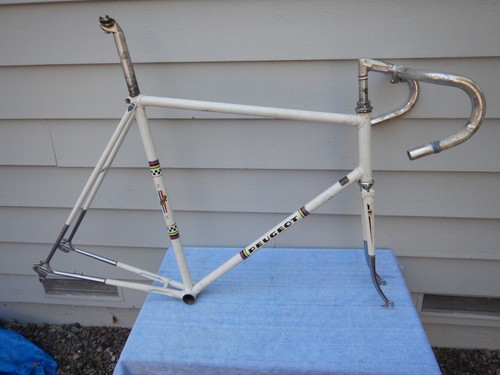
- Peugeot's 1974 catalog lists Reynolds 531 throughout, frame and fork, on both the PX10E and the PX10LE. Look for the 531 decal in the photos. It sat on the seat tube in 1971 and on the down tube by 1973, so its spot also helps date the frame.
- The frame
- Nervex lugs are the PX-10 signature. The 1971 frames used the fancy Professional cut, and 1972 frames switched to a plainer Nervex pattern. Ask for close photos of the head and seat lugs, and check the forged Simplex dropouts for bends.
- Sizing
- The 1974 catalog offered 20, 21, 23, 24 and 25 in frames, and the 1978 one listed 52 to 64 cm. Peugeot itself called its inch sizes approximate, so ask the seller to measure the seat tube.
- Threads and standards
- Expect French threading on a 1960s or 1970s PX-10, with a 35 x 1 mm bottom bracket and a French headset. French cups are getting hard to find, so keep good ones, or use Phil Wood French rings or a Velo Orange threadless cartridge. By 1984 the PX10L catalog lists BSA (English) threads, so check the shell on a late one.
- Wheels
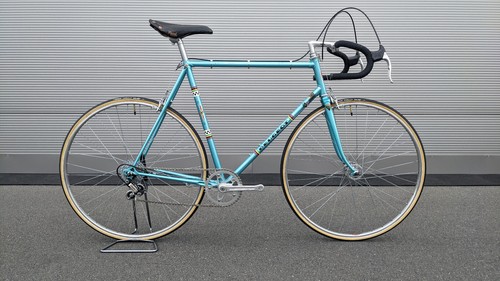
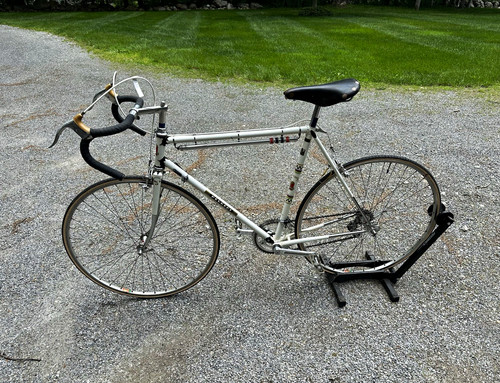
- The classic PX-10 rolled on Mavic Monthléry tubulars with a 5-speed freewheel, which points to 120 mm rear spacing. The 1974 UX10 was the same bike on 27 x 1 1/4 in clinchers, and the 1980 PXN10E moved to 700c clinchers with a 6-speed freewheel.
- Parts it came with
- The 1974 PX10E came with a Simplex Criterium rear derailleur, Stronglight 93 cranks, Mafac Racer brakes, Normandy Super Competition hubs and AVA bars. By 1977 it was Simplex SX410T, Stronglight 99 and Mafac Competition. Delrin Simplex derailleurs crack, so many have been swapped.
- Dating it
- Look under the bottom bracket for the serial. Six digits usually means the 1960s and seven the 1970s, and the first digit sometimes gives the year in the decade. Simplex derailleurs, Normandy hubs and many rims carry date stamps too, and the bike is no older than its newest original part.
- Paint and decals
- Peugeot changed the head badge, down tube and seat tube decals in small steps, year by year, and a collector's PX10 timeline online photographs each step. Reproduction decals are sold, so a perfect set on fresh paint usually means a respray.
- Safety jobs
- Many 1970s French bikes came with AVA bars and stems, which have a reputation for failure, and the 1974 PX10E lists AVA bars. Replace them before riding hard. French stems are 22.0 mm, so a standard 22.2 mm quill stem usually needs a light sanding to fit, and French bars need a French stem.
Check the listing photos against these lists, and ask the seller about anything you can’t see. Swapped or missing original parts should come off the price if originality matters to you. For replacements, see our vintage components guide.